
The impact of AI is undeniable. It’s in Google Maps, when forecasting the traffic status in real time. It’s in streaming platforms, when they offer suggestions based on your consumption patterns. You’ll find it in your banking app, when you need to ask a question or make a complaint. However, to connect with your target audience, AI alone won’t do. To engage the public, high-end brands need human-in-the-loop communication services. Deep dive into this article to know why!
A Supporting Tool, not a Decision-Maker
If you need to communicate ideas in different languages, translate messages, spread your brand voice, reach new customers or audiences, or interact with them through your app, there are a thing or two you should know before deploying AI in your projects and, specially, before deciding to rely on it blindly. Spoiler alert: a human-in-the-loop is a must!
Many brands exclusively trust AI to create bilingual campaigns, describe their products, deal with prospects and clients through the funnel, and enhance the user experience. Chances are this will lead them not to great success, but quite the opposite.
AI is a supporting tool, not a decision-maker. So, you may use it, but to avoid a monumental failure for your brand, team it with human supervision. This is where professional linguists come into play. Only they are capable of making choices that will capture your prospects’ attention and convert them into [returning] clients with a clear, cohesive message that respects your brand tone, voice, and manner and meets, or better yet exceeds, client expectations. Your brand and any brand wishing to connect with their audience need human-in-the-loop communication services.
What This Article Covers: Beyond the AI Hype
In this article, I try to shed light on this reality by tackling:
- And last, but not least, how the role of the linguist is evolving and contributing to high-quality, fast turnaround?
Ready to deep dive into these concepts, and make well-informed decisions to enhance your communication with your clients and prospects? Let’s explore in detail why AI can work as a supporting tool, but it will never be (at least not for now) a decision-maker… that’s the expert linguist’s role!
Why is AI embedded in the translation workflow?

The rise of AI has dramatically changed the way we live and work for good. Why shouldn’t it? It works as a high-speed sewing machine assembling pieces quickly. Among some of its many advantages, it streamlines research, so that you focus on analyzing the information rather than searching it, or it summarizes long reports to save you reading time. It also automates repetitive tasks, such us entry data, e-mail management or inventory control, which helps avoid fatigue and, consequently, mistakes. It refines your writing; for instance, through predictive text and grammar checkers which don’t just fix typos, but suggest better flow and tone. This definitely sounds like a lot of help. If we translate this reality to the world of fashion, for instance, we could say that AI can assist a tailor in many stages of the design process; however, it cannot design the whole collection by itself.
Fast Turnaround Does not Equal Connection
Let’s focus on how AI is applied in the translation workflow. Many companies and brands have integrated artificial intelligence into their translation and communication processes as it can deal with huge texts in an astonishing short span of time. AI can translate your text from English into Spanish within seconds, delivering a sort of decent piece.

So, using AI to translate your assets makes a lot of sense, of course, as it saves you a lot of time. However, it does not guarantee accuracy or successful communication. This should be commissioned to an expert linguist, who will assess AI output and make all necessary adjustments to ensure your audience gets your message right, maintaining your intended nuance and brand identity. It is clear, then, why brands need human-in-the-loop communication services.
If you want your brand to thrive, then you can’t afford an off-the-rack output, which is what you get when using AI exclusively. You need an expert’s eye who will make all the adjustments necessary to convey your message and maintain your brand nuance and emotional relevance.
Only a human designer is qualified to understand how and why a specific phrasing will make your brand shine like a dress on the red carpet. Only a human designer knows how to customize your message and approach in a way that fits your audience to engage them and foster their loyalty.
Judgement is King
AI may be embedded in your workflow, but when it comes to communicating your brand message or selling your products it is, by no means, an acceptable substitute for professional human judgement. In the same way a sewing machine joins fabrics and materials together, you can automate the mechanical or repetitive aspects of your processes to streamline your methods and free the human linguist to focus on what matters most but AI cannot achieve: cultural resonance and emotional connection. Thus, you ensure your piece fits your audience like a world-class custom-made suit. And to nail it, brands need human-in-the-loop communication services.
Why high-end brands can’t afford to rely exclusively on AI output?
The Role of AI in Global Scale
The integration of artificial intelligence into the modern translation workflow has revolutionized the speed and scale at which global companies operate. By streamlining the different processes, AI promotes technical efficiency in unprecedented ways. This automation is the foundation for high-volume translation and localization, allowing businesses to handle massive amounts of data and repetitive content—such as technical specifications or inventory lists—at speeds that no human team could ever match.
The Limits of Technical Efficiency
However, this technical efficiency comes with significant limitations when applied to the nuances of brand identity.
While AI works like a high-speed sewing machine—it can produce pieces quickly—, it cannot design the collection. It’s great to operate with structured data, but it lacks the cultural sense, empathy and creative judgment required for effective communication, something that high-end transcreation (by a human expert) can indeed offer.
Too often the advantages of cost-reduction and speed are offset by lack of emotional resonance, hallucinations in critical contexts, and a bland tone that can alienate your target audience.
In luxury and creative sectors, the human linguist acts as the bridge between a generic message and a culturally rooted experience. Their judgement will always help ensure that your brand’s soul remains intact across languages. Still doubting about the relevance of human-in-the-loop communication services for brands?
The Non-Negotiable Human Touch
High-end brands build their value on emotional connection, trust, and exclusivity. Therefore, they can’t afford to rely exclusively on AI output. This is not a shortcut to success; rather, it is a strategic blunder that can lead to detrimental outcomes for your brand, and loss of trust and loyalty from your clients. For a brand that sells an aspiration, the human touch is not just a preference but a necessity that not only helps to protect its reputation, but also to strengthen it.
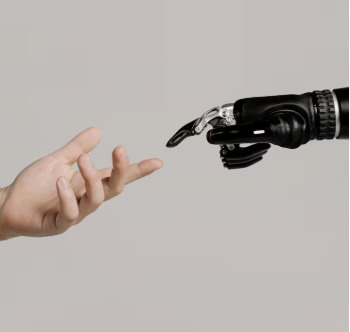
Why AI alone is not enough to enhance UX?
Similarly to the tools and machines that prepare, cut, and saw fabric to create a gorgeous piece, AI handles the technical and repetitive aspects of the translation workflow. And in the same way it is the tailor who guides those tools and machines to create that gorgeous piece, AI needs HI (Human Intelligence) to create the right impact in user experience. Because AI alone is simply not enough; brands need human-in-the-loop communication services.
Speed vs. Efficiency
When dealing with app translations, for instance, AI will likely translate buttons or error messages in a literal manner which can feel cold or robotic if the translation choice and style doesn’t match the user’s mental model. This lack of connection or understanding on the client side can even lead your brand to miss opportunities.

Remember, AI provides a quick starting point, but the UX writer, the human expert, is the tailor, the person who provides that conversational flow that makes a digital product feel helpful, foster connection, and lead to the ultimate goal: conversion.
Automation vs. Trust
When it comes to user experience, a brand cannot rely on AI alone because automation may simply lead to a catastrophe.
If the user experience is not a smooth one, then the connection is broken, and trust is lost. AI is the sawing-machine assembling the pieces, while the linguist is the designer who makes those pieces suit the customer perfectly, so that their expectations are met, and their journey can be as frictionless as possible.
A seamless journey fosters trust, which is the cornerstone of user experience and the starting point to encourage returning customers.
One-Size-Fits-All vs. Customization
AI is an enormous repository that can suggest content based on stored data, it retrieves information from that large library, but it does not create new knowledge.
True UX enhancement requires understanding cultural nuances and intent, something AI cannot yet grasp. Relying exclusively on AI for user-oriented content is not a shortcut to a better product; it often leads to a generic, off-the-rack experience that fails to differentiate a brand in a crowded market and to help you connect with your target audience.
At this point, please tell me you are no longer hesitant about why AI alone is not enough to enhance UX.
User experience is not merely a technical achievement; it is an emotional and cultural journey. While AI is exceptionally good at streamlining processes and managing the massive data loads required for global products, it lacks the human intuition needed to design in line with a customer’s feelings, context, and identity.
AI provides the scale, but the human-in-the-loop provides the soul, the connection.
How a design-first approach to your content can streamline the localization process?
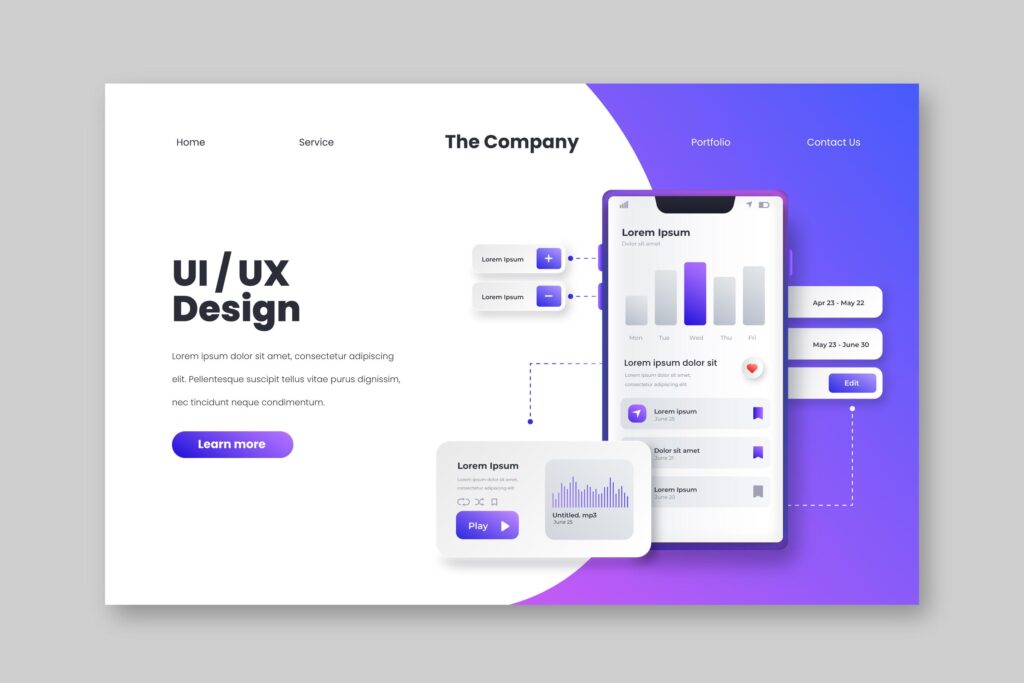
Siloing all the phases of a project may slow down the whole process and be detrimental for the results. A design-first approach to content integrates the linguist into the UX design sprint from day one, which creates a seamless workflow for the localization team, preventing the technical and cultural friction that can stall your global launch.
This approach can streamline the localization process in several ways, one of them being the elimination of text expansion friction. In languages like German, Spanish or French, text can expand by 20% to 35% compared to English. A design-first approach uses flexible components (auto-layout) and concise UX writing to account for this growth early on. This prevents broken layouts or overlapping text in the localized version, and guarantees a global product which is visually stable.
Identifying Cultural Blockers
Another way in which a design-first approach can reduce friction from day one is the chance to identify cultural blockers. When a linguist or content strategist take part in the design phase, they can flag metaphors, icons, or idioms that won’t translate well before any code is written. This is much cheaper at large, since changing a paper plane icon to a Send button in Figma is simpler than to refactor an entire app after a failed launch. This proactive check allows you to stay away from a generic product and lean towards a culturally resonant experience.
As the tailor, AI can handle the repetitive tasks, while the designer, I mean, the linguist focuses on the brand voice. This in-sync work is the sweet spot between high-speed production and premium quality.
The Ultimate Goal: A Frictionless Journey
Design-first content isn’t just about nice, better words; it’s about building a product that can be localized resulting in a frictionless journey. It ensures that the visual design and the linguistic design are born together, transforming localization from a post-production hurdle into a synergy in the design process, and allowing the linguist to act as a cultural consultant from the very beginning.
How is the role of the linguist evolving and contributing to high-quality, fast turnaround?
The role of the linguist is undergoing a profound transformation. It has been a long road since the focus was merely on transferring a message from language A to language B. Today, the profession has evolved, and the linguist has become a strategic content architect. In an era where AI handles high volume at a speed no human being can match, the linguist ensures that the final product is accurate, original, cohesive, and actionable for the user.
Here is how the profession is shifting to contribute to both high-quality and fast turnarounds:
From Translator to “Human-in-the-Loop” Editor
In the past, the translator could process an average of 2,500 words a day. Today, the modern linguist uses AI as a powerful tool to handle the initial heavy lifting. By focusing on post-editing (MTPE) and strategic refinement, they can process thousands of words in a fraction of the time it took a decade ago. Of course, MTPE is not applicable to all kinds of texts. Some companies apply it arguing the process saves time, but this is not always the case—something worth mentioning although it is not the topic of discussion in this article.
When it comes to brand identity, a fast-turnaround model is based on the fact that the linguist focuses their energy on the 20% of the content that carries 80% of the brand value, ensuring that speed never compromises the core message.
From “Post-Production” to “Design-First” Integration
There was a time when the translator received a finished file to translate. But that is also evolving. Linguists are increasingly being integrated directly into the UX design from the very start. So, they work inside design tools like Figma to provide cultural insights while the product is still being built.
This proactive involvement prevents broken layouts or culturally insensitive icons. By solving problems before they are coded, the linguist safeguards you from later-stage revisions that could cost you extra time and money.
From Language Expert to Cultural Consultant

As AI achieves technical accuracy, the human linguist’s value shifts toward cultural resonance and transcreation. Through their expertise, they act as a consultant who understands the emotional landscape of the target audience, something an algorithm cannot grasp.
This expertise will help your brand move away from generic, automated outputs and towards a bespoke journey for the user. A journey that will convert the user to a loyal customer.
For high-end businesses, this can be the difference between being a bland, soulless brand and a compelling, authoritative name with a global reach that feels local.
From Manual Labor to AI Orchestration
The current circumstances have pushed linguists to reinvent themselves and become experts in prompt engineering and workflow automation. They saw the need to wear different hats and started training the language models, setting the tone-of-voice parameters, and managing the translation memories that fuel the engine.
This mastery of the tools represents the channel between massive scale and artisan quality. And it allows your brand to go from the source to the localized idea, content, and product seamlessly, achieving results that convert.
In a Nutshell…
The linguist of the future is no longer just someone who is acquainted with two or more languages. In a world flooded by content and automated noise; they’ll become the guardian of every brand voice.
We, linguists, don’t just translate words; we are trained to design your success internationally, sounding local.
